

A return on discovery
The wager of orbital economy pays off only if safe return to Earth becomes as routine as launching off-world

“Wealth is our organized capability to cope effectively with the environment in sustaining our healthy regeneration and decreasing both the physical and metaphysical restrictions of the forward days of lives.”
– Buckminster Fuller, Operating Manual for Spaceship Earth (1969)
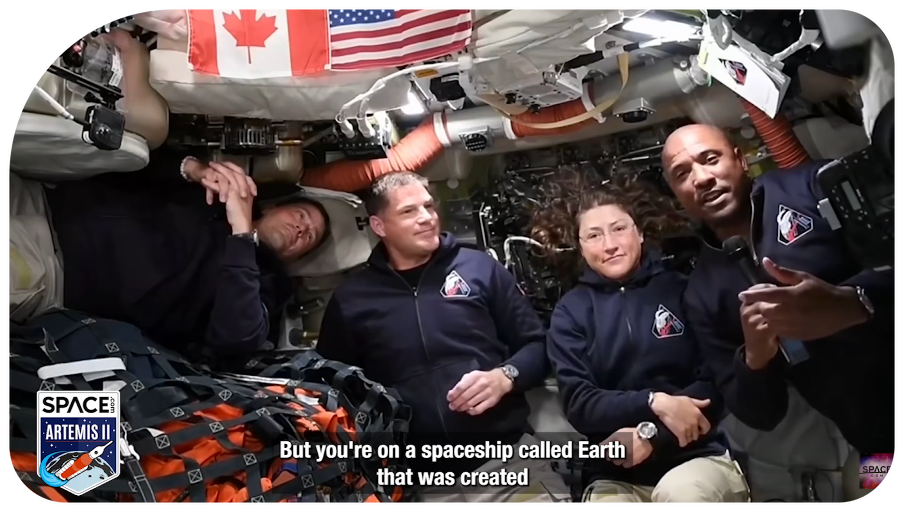
So much of our idea of space is about going “out there.” The romance is in the launch, the escape from gravity, the frontier. But increasingly we’re convinced that going to space is less an act of escape than a wager placed on what we can bring back. The true stakes of spacefaring for humanity accrue silently in orbit and only become legible at the moment of return. For that reason, the wager about what we return from going to space is a challenge at least as significant as the launch; a cornerstone of the current expansion of the new space economy, sure, but also something more philosophically interesting. It is the test of whether spacefaring can deliver on a promise that what we learn and build off-Earth will meaningfully serve everyone down here.
The Question of Real Wealth on the Spaceship Earth
This is part of what Buckminster Fuller was reaching for in 1969 when he wrote Operating Manual for Spaceship Earth. The book is most famous for its central provocation that the distinction between Earth and space is an illusion of perceptual narrowness, since Earth is itself a spaceship eight thousand miles in diameter, traveling around the Sun at sixty thousand miles an hour. Fuller’s deeper claim is that our species has a peculiar evolutionary endowment that uniquely renders us capable of seeing whole systems where most creatures see only parts. This ability, to construct wholes out of the parts, he saw as the keystone of human projects from our deeply wedded forms of collaboration to the largesse of scientific inquiry. It is an evolutionary endowment that has a lot of inbuilt responsibility, which, for him, compels us to do better with the “wealth” of our know-how as we translate it into more and more complex forms of well-being within our Earthly environment.
Fuller’s notion of wealth here is curious. He insisted that our entire accounting of wealth was wrong when we rely on the flimsy econometrics like gold, ledgers, and GDP, which he saw as specious stand-ins for metrics that really had a consequence on our biochemical reality here on the spaceship we call Earth. “Wealth,” he wrote, “is our organized capability to cope effectively with the environment in sustaining our healthy regeneration and decreasing both the physical and metaphysical restrictions of the forward days of our lives.” Real wealth, in other words, is measured by our future maintenance as a planetary entity, by how many people, for how long, can be sustained at a rising level of metabolic and intellectual flourishing. Read that way, the wager of space discovery is part and parcel of that pursuit of wellbeing. The question stops being whether a launch “pays off” in dollars and starts being whether it expands the ship’s capacity to regenerate itself and sustain our lives on this weird evolutionary spacevessel into perpetuity.
“Real wealth is measured by our future maintenance as a planetary entity, by how many people can be sustained at a rising level of metabolic and intellectual flourishing.”
It’s a helpful shift in thinking about the wager and the debt born of such adventurism, especially in debates about public spending on space exploration, where criticism is lobbed at space projects as distractions from what people feel are more pressing problems here on Earth. What that critique misses is the return from an expanse in the wealth of know-how, which indicates that the real problem people have is not with space pursuits alone. Rather, they worry about how these pursuits return to Earth, how they might be shared, and how this enables our collective well-being through what we discover.
What do we get
Much like the legitimate critique, made famous by economist Richard Nelson in The Moon and the Ghetto (that we should not be doing any of this when so many problems remain unsolved on Earth), there are at least two answers to that critique, and both of them only make sense once you accept Fuller’s redefinition of what counts as a return.
The first, articulated most clearly by Carl Sagan’s ecological work, is scientific. By studying other worlds (in his case, Venus’s runaway greenhouse and Mars’s frozen wasteland), we developed the conceptual instruments to understand our own Earthly climate. Sagan’s argument was that comparative planetology is reflexive because it gives us a generic object with which we can look back at ourselves. In Fuller’s accounting, that reflexive knowledge is wealth in the strictest sense in that it directly extends the forward days of the species by teaching us how not to wreck the planet’s life-support system.
The second answer, closer to Fuller’s own aspirations, is that the conditions of space make certain synergistic possibilities in manufacturing possible that simply cannot be produced or perceived from the planet’s surface. If those things make their way back down and benefit humanity broadly, then space stops being a frontier for the few and becomes an extension of the human capacity to regenerate the whole ship. The wager only pays out, however, if the return circuit closes and if what comes back is metabolized by the planet rather than hoarded as spoils by the most powerful few.
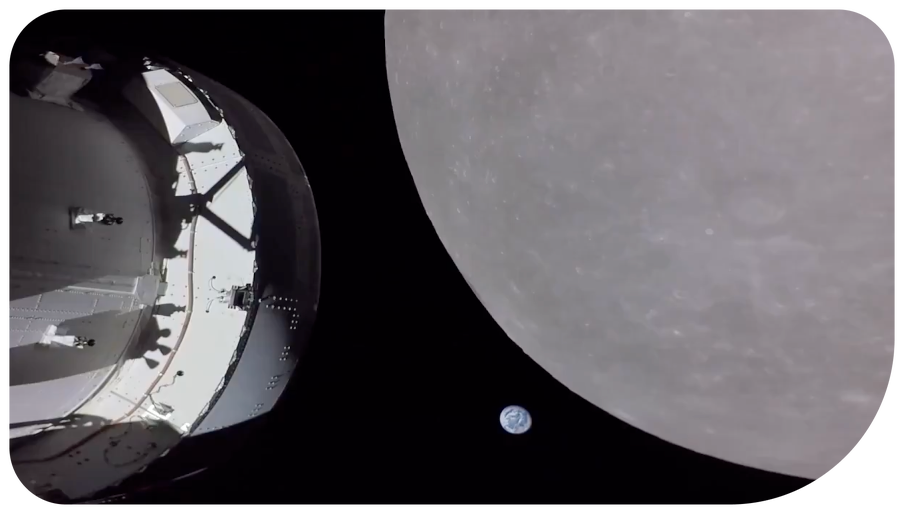
Logistics
I thought about this a lot last week, during a quick trip to London, where I attended the Open Court event featuring a number of startups developing new technologies that are highly dependent on what they return to Earth.
For instance, Katie King described how BioOrbit uses microgravity to grow antibody crystals with a structure that allows cancer treatments to be administered at home rather than through hours-long hospital infusions. Their “minilabs” are not much larger than a parcel; they hitchhike up and back on other missions, returning with payloads that, in Fuller’s sense, are almost certainly measurable extensions of the lives of the people who receive the resulting drugs.
Listening to her, I couldn’t help thinking that our generation’s version of offshoring may end up being governed by physics rather than labor cost. As materials science explores how proteins fold in certain ways, how alloys mix without sedimenting, and how fibers grow without gravity pulling them out of true, we see that advanced manufacturing should not be limited to the surface of the Earth. The factory floor moves orbital, not in search of cheaper or less regulated workers (like in the era of heavy globalization we just lived through), but in search of conditions that synergize the best of our scientific know-how, orbital conditions, and the materials we have here on Earth. Whether this avoids the extractive dynamics of the last great offshoring wave depends entirely on how the winnings are distributed when the capsule splashes down, but the wager itself is clear and realizable.
“If goods are being made in orbit and landed to within a few meters of a chosen point, we are not far from asking what last-mile delivery looks like in LEO.”
Francesco Cacciatore presented Orbital Paradigm‘s reusable reentry capsules, designed to bring materials manufactured in zero gravity back to Earth with precision landing. It made me think that if goods are being made in orbit and landed to within a few meters of a chosen point, we are not far from asking what last-mile delivery looks like in LEO, which would have major ramifications for the spaceship Earth’s metabolism when matter and information start circulating between orbit and surface as routinely as freight moves between ports today. My sci-fi addled brain was clearly taking speculative liberties with everything I was hearing, but the underlying point about the promise of a reusable, predictable return leg is the piece of infrastructure that converts orbit from a destination into a working part of the planet’s regenerative system, which felt clarifying.
Closing the circuit
The launch revolution of the last two decades has set the stage for a new set of wagers about what we will return to Earth with after going beyond it. But a circle is not a circle until it closes, and a wager is not paid out until the winnings reach the people who placed it. What I took away from Open Court and revisiting Fuller’s classic text in the same week is that we are entering the era in which the return half of the circuit is finally being engineered with the same seriousness as the departure. Reentry capsules and crystallized antibodies are becoming the connective tissue of a single system learning to complete its own loop, and to do it in a currency Fuller would recognize as a form of healthy regeneration towards our common wealth as Earth dwellers.
The engineering alone, however, does not decide what kind of loop it will be. Whether the medicines reach the patients who need them, whether the climate data informs decisions that protect everyone, and whether orbital infrastructure becomes a shared resource rather than a private enclosure will all determine how these engineering feats will land back on Earth. It is the open political and ethical question riding atop, and it is the part of the wager that a species as a whole, not just its clever engineers, will have to win. Fuller insisted that “it has to be everybody or nobody” for Spaceship Earth. It only works when we operate it as a whole. The promise of this round of spacefaring is that, for the first time, we have the engineering to honor that conviction.