

Environmental wellness
Why “tested in space” is becoming a quality marker


“Made in space” and “tested in space” are beginning to enter the consumer lexicon in the beauty and wellness world and are slated to become premium credentials over the next five to ten years. But why? It would be easy to file the move as a gimmick piggybacking on the resurgent cultural attention on space. In actuality, these labels are increasingly being used the way “Swiss-made” was once used in watchmaking, or “dermatologist-tested” in skincare — as a quality guarantee. And the reason this is happening isn’t really about space per se, but an indication of how people are understanding their wellness with respect to the environment.
These labels have, in essence, become a maximalist version of testing under constraint now that the aspirational and the prophylactic factors have finally aligned in the current wellness discourse, which sees high performance as the newest form of beauty. A peptide that has been formulated, or even just stability-tested, for an environment where people are only able to sleep for six hours a night and breathe through filters can make a more credible claim to the buyer than a serum that has only been clinically tested in “terrestrial”-vintage conditions.
Most luxury credentials have historically been about scarcity or opulence, where Swiss watchmaking implies generations of craft, Champagne implies a particular hillside, and “dermatologist-tested” implies the surplus capacity of a healthcare system that can afford to do non-essential trials. “Tested in space,” by contrast, is a credential about a deliberately constrained environment, a sealed and metered atmosphere, a body whose every variable is monitored because every variable is precarious. It is a luxury claim: these products and their ingredients are so high-performance that they can survive the most extreme environments, as evidenced in garments like the Mars jackets produced by Vollebak.
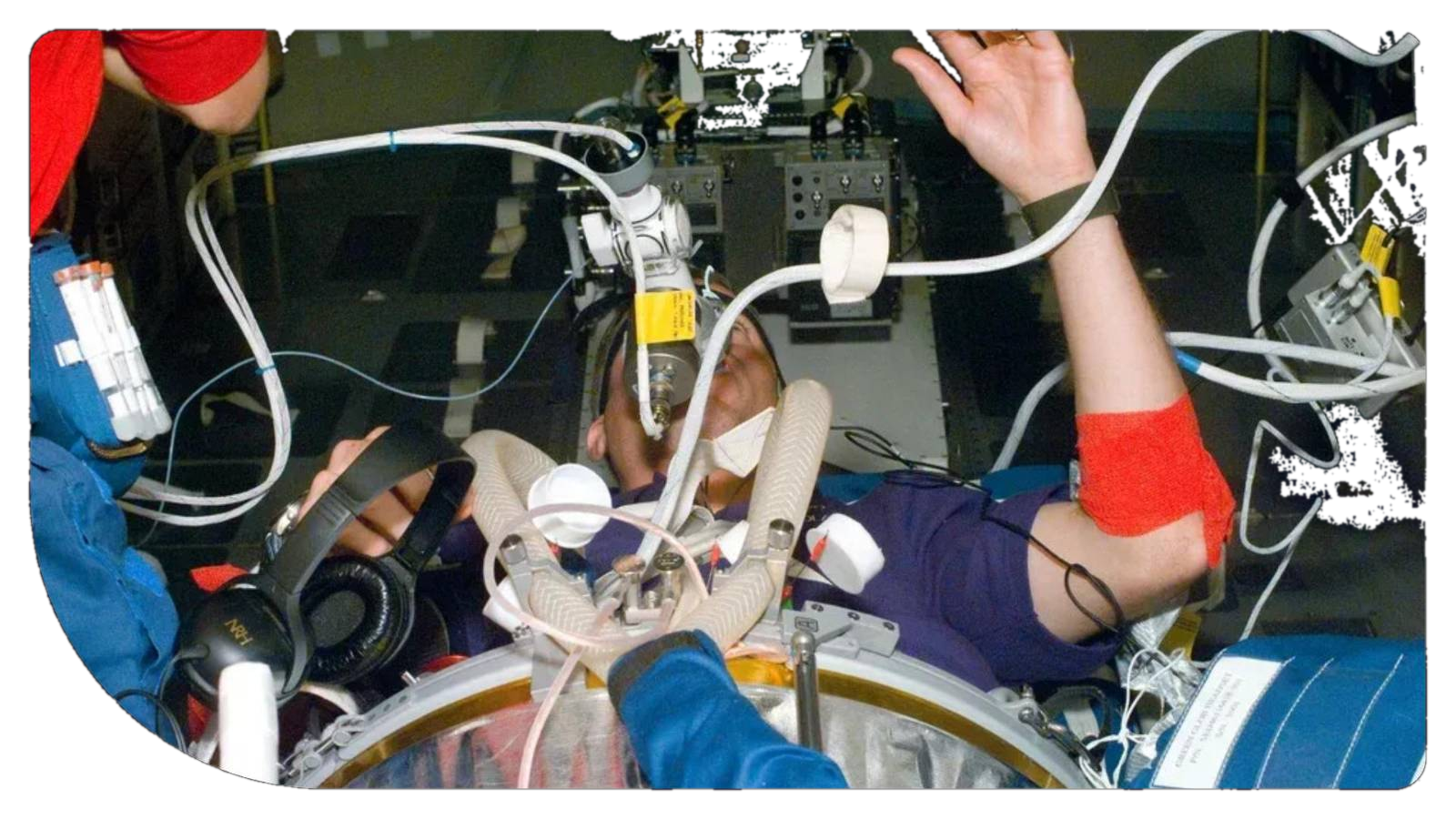
The reason space is a more compelling proxy is not that it’s more glamorous, though it is. Space is a negative environment. To do anything there, you have to subtract so many of the conditions on Earth that make life habitable for humans, like gravity, atmosphere, ambient pressure, the day-night cycle, or the other terrestrial niceties we usually have the luxury of ignoring.
Conditions on Earth are themselves becoming more inhospitable as climate change progresses; ambient air in many cities is something to be wary of, and no one needs an explainer to understand why noise-canceling headphones have become universal. Are made-in-space products, or products designed for extreme environments more generally, preparing us for a newly inhospitable world? The spacesuit — designed to keep a body alive in a literal vacuum — was the original answer to the question of what we wear when the environment turns hostile. The Dyson Zone, much-mocked 2023 air-purifying headphones with miniature compressors blowing filtered air across the wearer’s face, appear palpably less absurd year on year as urban environments become systematically less hospitable. The research project Earthsuits, based at Central Saint Martins and led by Stephanie Sherman and Rachel Pearl alongside Substrate’s own Lukáš Likavčan, has been arguing for a more rigorous version of the same point. They start from the idea that clothing has always been a planetary technology, and what we’re now beginning to design isn’t fashion in any traditional sense but personal atmospheres that are portable; modular architectures for an environment that has stopped negotiating back.
Which brings us back to why space, specifically, is the credentialing environment that is taking hold in consumer products. The dermatology lab tests products under conditions that are simpler than those on the street. Space tests them under conditions that are way harsher, deliberately more constrained by pressures and stressors far exceeding any condition on the Earth’s surface. If a molecule does what it claims after you’ve stripped out gravity and ambient pressure and the day-night cycle, the inference is that it will probably do what it claims after you put those back.
Dr. Yannis Alexandrides, the London plastic surgeon who founded 111Skin in 2012, was early to this framing, suggesting that “space is a laboratory for aging because it accelerates everything.” The same goes for Brand Labs USA, which now sells a white-label version of NASA’s Rotary Cell Culture System, a microgravity-simulating bioreactor invented at the Johnson Space Center, as a service any beauty brand can buy.
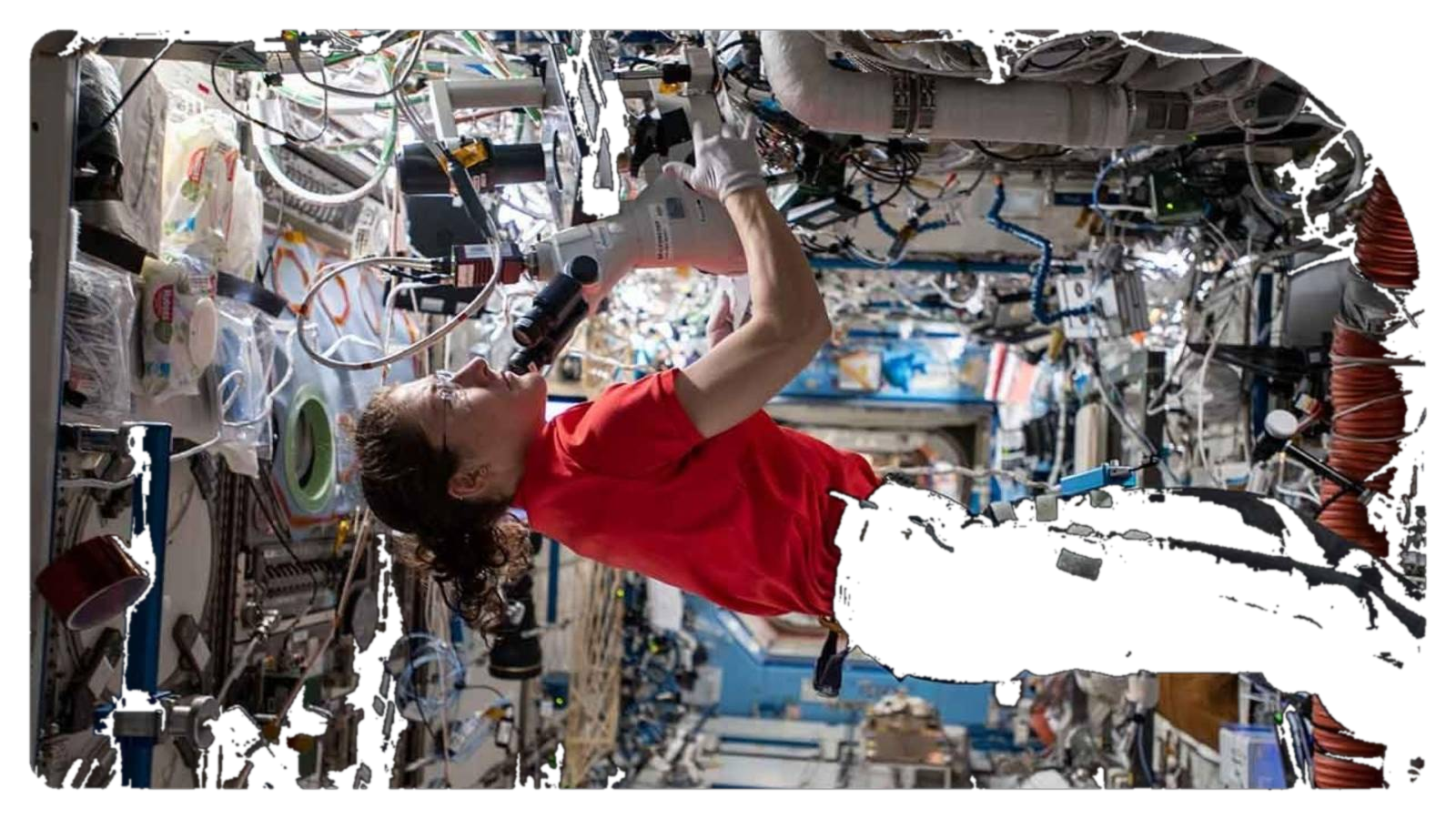
The burgeoning domain of peptides provides another illustration. These short chains of amino acids that function as signaling molecules have crossed into mass-affluent consumer health on the back of GLP-1 receptor agonists like semaglutide and tirzepatide. They are almost form-fit for the type of high-performance, extreme-environment testing made possible by space. Some of the earliest research into these peptides comes from the activities of the Soviet space program which hoped to mitigate the deleterious effects of the outer space environment on the body. One of these was Semax, originally commissioned in the 1980s from the Institute of Molecular Genetics in Moscow to protect cosmonauts and submariners from radiation, closed-environment stress, and accelerated aging. Alongside Selank, Epitalon, and other molecules, many of these peptides are about to have their commercial moment in the US, provided that US regulatory channels complete their current re-classification processes.
This is the molecular class to which the “made in space” label will increasingly attach. Peptides are short and clean enough to be made on demand from amino acid precursors; NASA researchers and their academic collaborators have built an early version of this, called the Astropharmacy, an engineered microbial platform that can be reactivated mid-mission to produce an initial peptide dose in under 24 hours. As civilian space tourists begin experimenting with peptides for focus, sleep, immune support, and skin barrier function on long flights, products designed for habitability will be tested in orbit under the most constrained conditions and then shipped back to Earth.
This also relates to the changing nature of who is likely to head to space in the near future. For the last decades, space was limited to highly-trained astronauts at peak physical capacity. But this is starting to change, which is why missions like SpaceX’s Inspiration4 flew the first all-civilian orbital crew in September 2021, where Penn Medicine and Nature documented the crew’s physiology. The crew slept an average of 6.7 hours a night and reported a workload comparable to six months on the ISS, despite three days in orbit. They came home with measurable cognitive deficits — slower psychomotor vigilance, slower digit-symbol substitution — that eventually resolved within weeks. The aim of gathering this data was to assess a new kind of test subject for space travel: the kind of out-of-shape, motivated civilian who is starting to line up for the next decade of paid orbital seats. Virgin Galactic is selling those seats now at $750,000 each for its new Delta-class vehicles. They are not being sold to people who can casually pull a week of resistance training; they are being sold to people who would prefer not to come home looking like they’ve been through something strenuous. As space tourism settles into a regular product, more people who have not trained as astronauts will be asked to survive and briefly thrive in conditions their bodies are not built for — and the kit they reach for will look more and more like the kit we are already buying on Earth.
So despite the trend-bearing nature of the new labels that space quality confers, what we are seeing is a larger demand for high-performance consumer wellness products that can sustain us in extreme environments, whether that be as untrained space tourists or as humble citizens of Earth subsumed by rapidly deteriorating natural systems. It could look like a peptide that protects circadian function in overlit urban environments or the timelessness of LEO. Or perhaps a topical ointment that supports barrier integrity under oxidative stress from inhabiting closed quarters for days on end. Maybe it’s a garment that filters incoming particulates and modulates outgoing heat on a moon settlement or the Sonoran Desert. None of these will feel like spacesuits, and some of them will not even have visible space provenance. But they will all be doing what spacesuits do: standing between a body and an environment that is no longer reliably hospitable to it.